
1185 W Carmel Dr. #D2, Carmel, IN 46032

Root Canal Therapy and Tooth Extraction: Which is Best?

When a tooth is badly decayed, infected, cracked, or causing severe pain, your dentist may recommend either root canal therapy or tooth extraction. Although both treatments can address a painful or infected tooth, they have very different long-term effects.
If a tooth can be predictably restored and maintained, root canal therapy is generally preferred because it preserves your natural tooth. Extraction may be the better option when the tooth is too damaged, fractured, loose, or otherwise impossible to restore. The right choice depends on the condition of the tooth, surrounding bone and gums, and your long-term oral health goals.
Root Canal vs. Tooth Extraction at a Glance
| Factor | Root Canal Therapy | Tooth Extraction |
|---|---|---|
| Main goal | Save the natural tooth | Remove a tooth that cannot be predictably saved |
| What happens | Infected pulp is removed, and the canals are cleaned and sealed | The entire tooth is removed from its socket |
| Natural tooth preserved? | Yes | No |
| Usually followed by | Filling or crown restoration | Tooth replacement may be recommended |
| Effect on neighboring teeth | Helps maintain existing spacing and bite | A missing tooth can allow neighboring teeth to shift |
| Recovery | Usually involves short-term tenderness | Healing of the extraction site takes time |
| Long-term consideration | Requires proper restoration and maintenance | May require an implant, bridge, or denture |
What Is Root Canal Therapy?
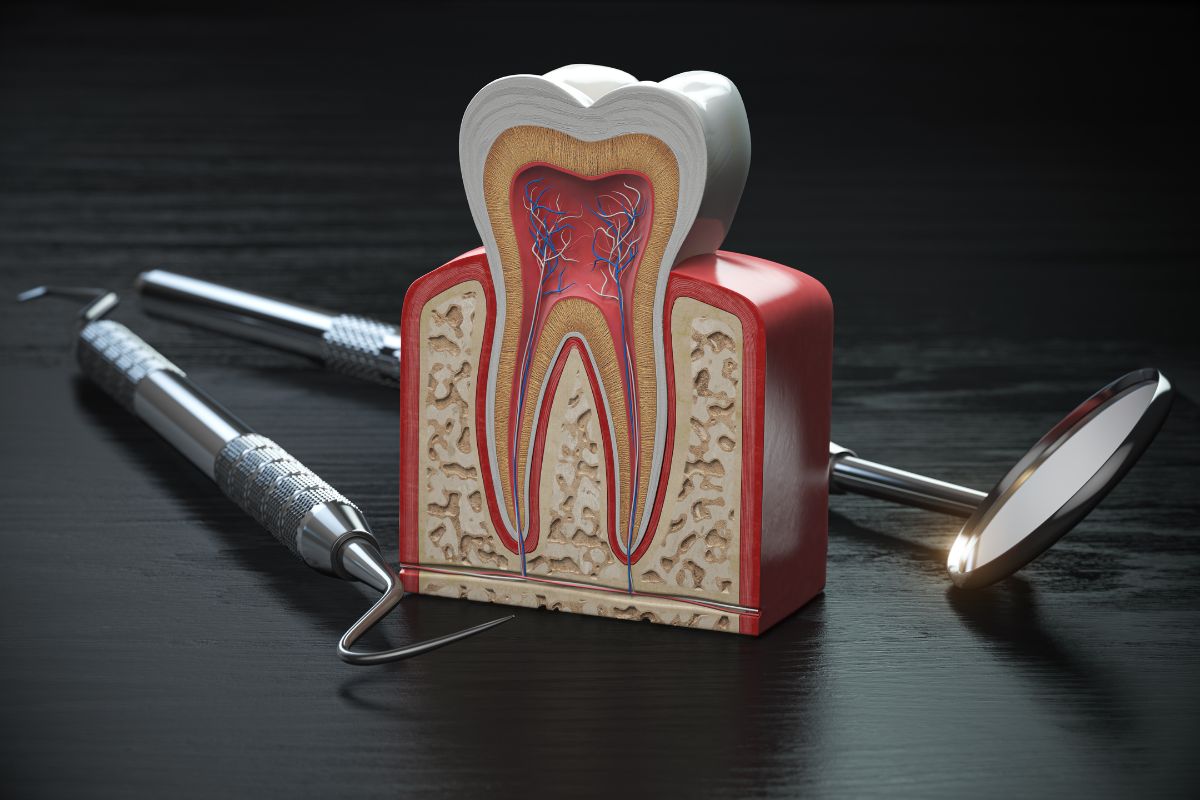
Root canal therapy is a treatment used to save a tooth when the pulp, the soft tissue containing nerves and blood vessels inside the tooth, has become infected or irreversibly damaged.
During treatment, the dentist:
- Examines the tooth and surrounding tissues.
- Uses dental imaging when needed to evaluate the roots and surrounding bone.
- Numbs the tooth and surrounding area with local anesthesia.
- Removes the infected or damaged pulp.
- Cleans and disinfects the root canal system.
- Fills and seals the canals to help prevent reinfection.
- Restores the tooth with an appropriate filling or crown.
A root canal does not remove the entire tooth. Instead, it removes the diseased tissue inside the tooth while allowing the natural tooth structure to remain in place.
When Might You Need a Root Canal?
Root canal treatment may be recommended when the pulp has been significantly damaged by:
- Deep tooth decay
- A crack or fracture
- Dental trauma
- Repeated dental procedures
- Bacterial infection inside the tooth
- Significant inflammation or damage to the pulp
Symptoms can include persistent tooth pain, prolonged sensitivity to hot or cold, pain when biting, swelling, tenderness, or tooth discoloration. However, symptoms alone cannot determine whether a tooth can be saved. A dental examination and appropriate imaging are needed to evaluate the tooth.
What Is a Tooth Extraction?
A tooth extraction involves removing a tooth from its socket in the jaw.
Dentists generally try to preserve natural teeth whenever possible. However, extraction may be appropriate when a tooth cannot be predictably restored or maintained.
Common reasons for extraction include:
- Extensive decay that leaves insufficient tooth structure
- A severe fracture that makes restoration impractical
- Certain vertical root fractures
- Advanced periodontal disease causing significant tooth mobility
- Severe damage that cannot be repaired
- Some impacted or problematic wisdom teeth
- A tooth that cannot be successfully treated with other procedures
Extraction removes the immediate source of a problem, but it also creates a missing-tooth space that may need to be addressed.
When Is a Root Canal Usually the Better Choice?
A root canal may be preferable when the tooth:
- Has an infected or damaged pulp
- Still has enough healthy structure to be restored
- Has adequate periodontal and bone support
- Can receive a durable restoration after treatment
- Has a reasonable long-term prognosis
The major advantage is that you keep your natural tooth.
Keeping the tooth can help maintain normal chewing function and the existing relationship between neighboring teeth. It can also avoid the additional treatment planning that may be necessary after an extraction.
When Is Tooth Extraction the Better Choice?
Extraction may be recommended when saving the tooth is not predictable.
For example, removal may be appropriate if:
- The tooth is fractured in a way that prevents reliable restoration.
- Too little healthy tooth structure remains to support a restoration.
- Severe periodontal disease has significantly compromised the tooth’s support.
- Extensive damage makes long-term treatment unlikely to succeed.
- Previous treatment has failed and the tooth has a poor prognosis.
- The tooth presents another dental problem that cannot be predictably resolved while keeping it.
The important question is not simply whether the tooth hurts. The question is whether the tooth can be successfully restored and maintained over time.
Root Canal vs. Extraction: What Should You Ask Your Dentist?
If you have been told that a tooth may need to be removed, consider asking:
- Is my tooth restorable?
- How much healthy tooth structure remains?
- Is a root canal a realistic option?
- Does the tooth have a crack or fracture?
- How healthy are the surrounding gums and bones?
- What restoration would the tooth need after a root canal?
- If I have the tooth extracted, should it be replaced?
- What replacement options are appropriate?
- What are the expected benefits and risks of each approach?
- What is the expected long-term outlook for each option?
These questions can help you understand the reasoning behind your dentist’s recommendation.
How Alvarez Family Dentistry Can Help
At Alvarez Family Dentistry in Carmel, we evaluate damaged and painful teeth to determine which treatment best fits the condition of your tooth and your overall oral health.
Our practice provides both root canal therapy and tooth extraction, allowing us to recommend treatment based on your individual needs rather than a one-size-fits-all approach.
If your tooth may be infected, severely damaged, or causing persistent pain, visit our dental practice in Carmel, for a comprehensive evaluation. We can determine whether your tooth can be preserved with root canal therapy or whether extraction and tooth replacement may be the better option.
Frequently Asked Questions
1. Is a root canal better than an extraction?
When a tooth is predictably restorable, preserving the natural tooth with root canal therapy is generally preferred. Extraction may be better when the tooth cannot be reliably restored or maintained.
2. Can a badly infected tooth be saved with a root canal?
Often, an infected tooth can be treated with root canal therapy if enough healthy tooth structure and supporting tissues remain. Your dentist must examine the tooth to determine whether it is restorable.
3. Is extraction cheaper than a root canal?
Extraction may cost less initially, but the long-term cost can be higher if the missing tooth needs to be replaced with an implant, bridge, or denture. Ask your dentist to compare the complete treatment plans.
4. What happens if I don’t replace an extracted tooth?
Depending on its location and your individual circumstances, leaving a missing tooth untreated can affect chewing, bite relationships, and the position of neighboring teeth. Your dentist can explain whether replacement is recommended in your case.
5. How do I know whether my tooth can be saved?
A dental examination and imaging can help determine whether enough healthy tooth structure, bone support, and periodontal support remain to restore the tooth predictably.
6. Can I choose extraction instead of a root canal?
The appropriate treatment depends on whether the tooth is restorable and what will provide a predictable long-term outcome. Your dentist can explain why one option may be preferable for your specific tooth.
The Bottom Line
When a damaged or infected tooth can be predictably restored, root canal therapy can preserve your natural tooth and its function. When the tooth is too damaged, fractured, or poorly supported to maintain, extraction may be the better option.
The decision should be based on a clinical examination, dental imaging when appropriate, the condition of the tooth and supporting tissues, and your long-term oral health goals, not simply on which procedure seems faster or less expensive.
If you’re experiencing persistent tooth pain, sensitivity, swelling, or a damaged tooth, book an appointment with Alvarez Family Dentistry in Carmel, to discuss whether root canal therapy, tooth extraction, or another treatment is appropriate for you.